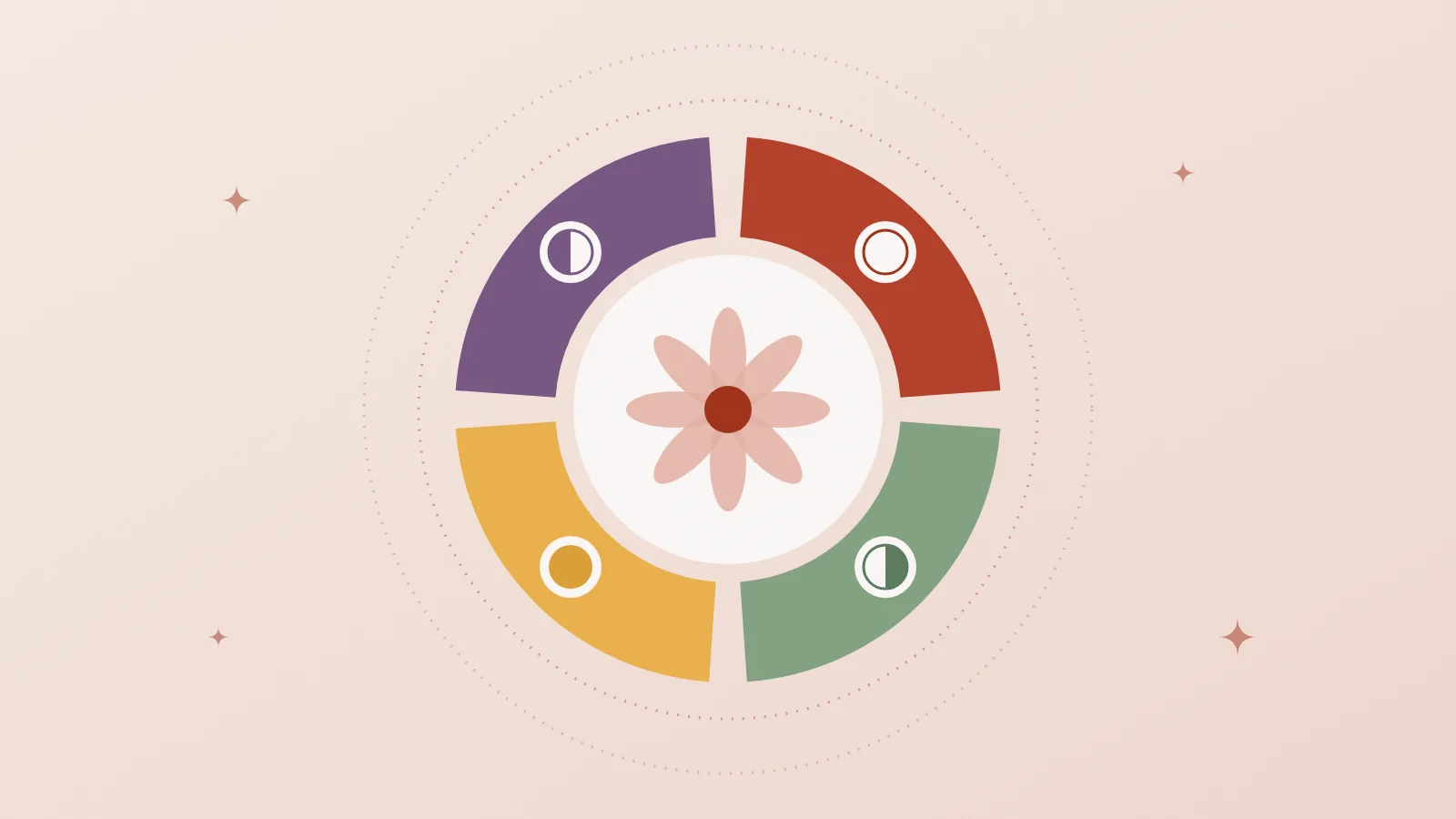
Your menstrual cycle is more than your period. It is a repeating pattern with four phases, each with its own typical rhythm. Understanding the general outline can make it easier to notice your own patterns and plan your weeks with a little more kindness.
First, a note about averages
Textbooks describe a 28-day cycle, but real cycles vary. A cycle between about 21 and 35 days is common in adults, and your own length can shift with stress, travel, illness, sleep and life stage. Treat the numbers below as a map, not a rule. Your body is the best source of information.
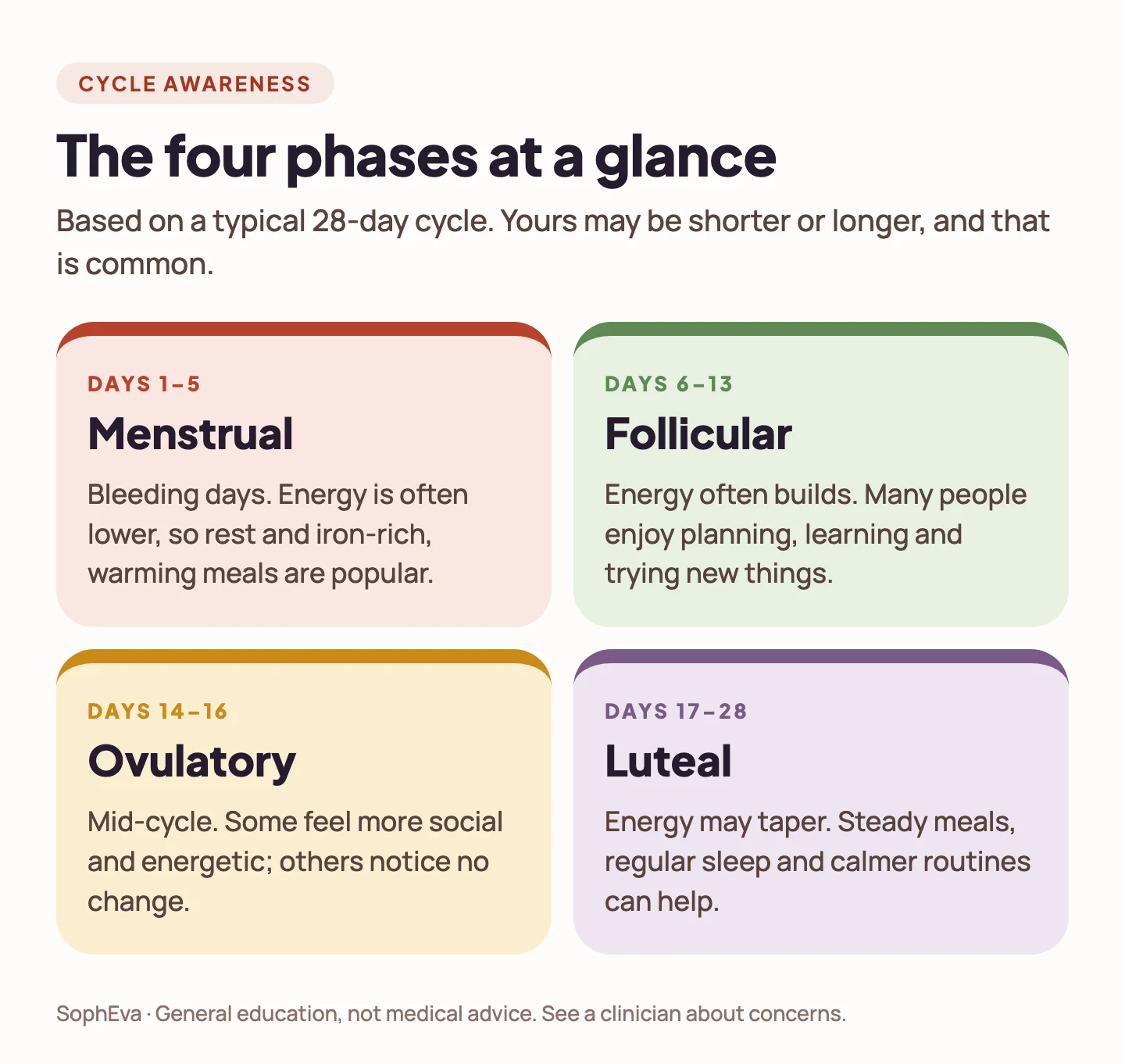
1. The menstrual phase (about days 1–5)
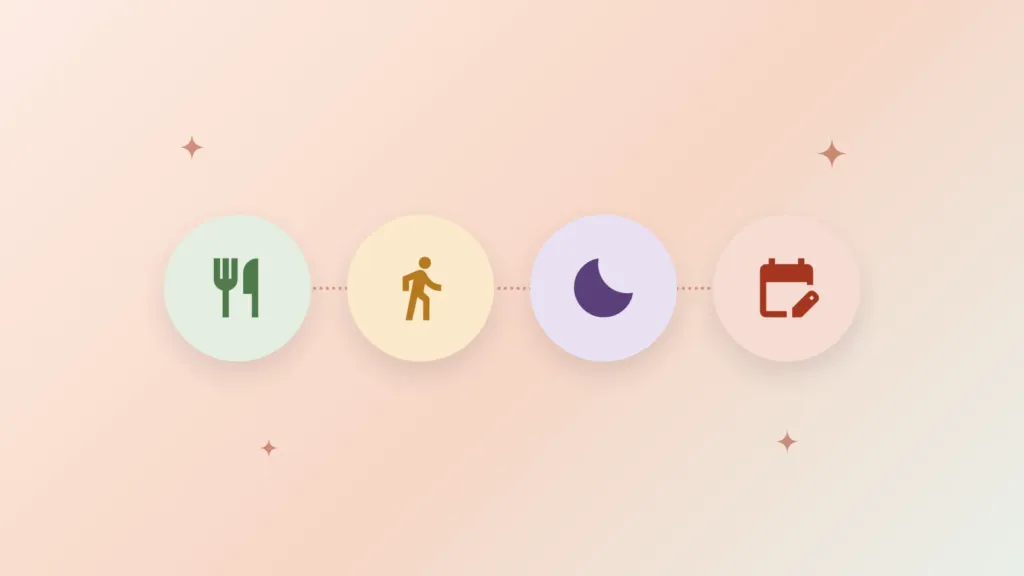
This is the bleeding phase, and it marks day one of a new cycle. Many people feel lower in energy and prefer slower days. Warm meals, adequate iron from foods such as lentils, leafy greens and dates, good hydration and rest are popular ways to look after yourself. Gentle movement such as walking or stretching suits many people better than intense workouts at this time.
2. The follicular phase (about days 6–13)
Bleeding ends and energy often begins to rise. Many people find it easier to focus, learn and plan during this phase. It can be a good time to schedule creative projects, harder workouts or important conversations, if you feel up to them.
3. The ovulatory phase (about days 14–16)
Ovulation happens around the middle of a typical cycle, when an egg is released. Some people notice higher energy, clearer skin or a sense of being more social. Others notice nothing at all, and that is completely normal. Some also experience a brief twinge or light spotting.
4. The luteal phase (about days 17–28)
The days before the next period. Energy may gradually taper, and some people notice cravings, tiredness, bloating or changes in mood. Regular meals with fibre and protein, consistent sleep, lighter social calendars and calming routines are all practical ways to support yourself.
Quick takeaway
Every cycle is different. Rather than following a chart, note how you feel for two or three months and use your own pattern as your guide.
How to start tracking
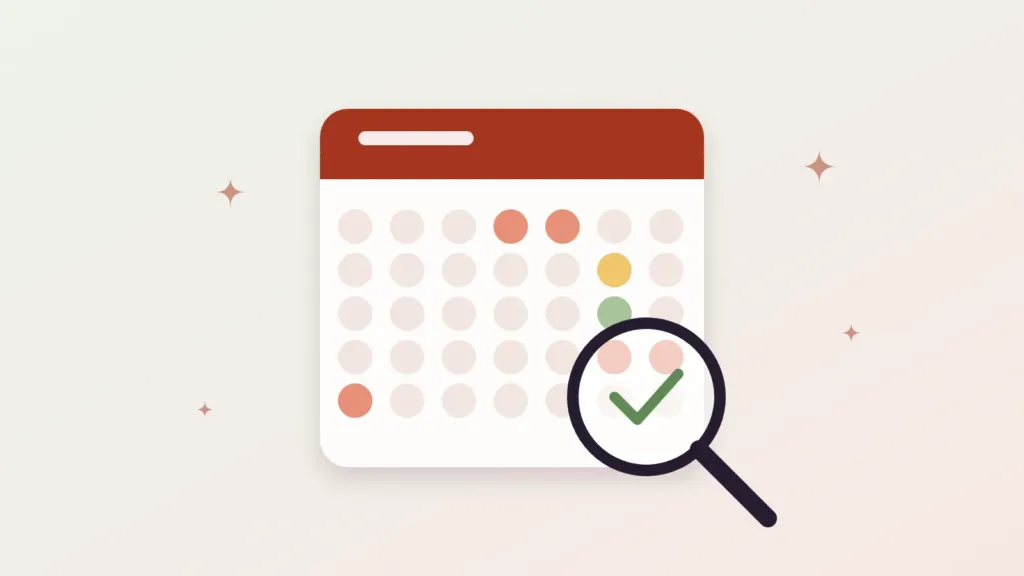
- Note day oneMark the first day of bleeding on a calendar or app each month.
- Add a daily check-inRate energy, mood, sleep and appetite from 1 to 5, or jot down one word.
- Look for patterns after three cyclesOne cycle tells you very little. Three begin to show what is usual for you.
- Share the record with your doctorA few months of notes make appointments far more useful.
When to talk to a doctor
Please speak to a healthcare professional if your periods are very heavy or painful, stop for several months without pregnancy, become suddenly irregular, or if you have any symptom that worries you. Cycle patterns can point to many different things, and only a clinician can tell you what is going on for you.
This article is general educational information. It does not diagnose, treat or replace advice from a qualified healthcare professional.
Make the routine effortless
The SophEva Rituals Kit gives you a pre-measured morning and evening sachet, so there is one less decision to make each day.
Disclaimer: This information is for educational purposes only and does not constitute medical advice. Always consult with a healthcare professional before starting any new supplement or lifestyle regimen.