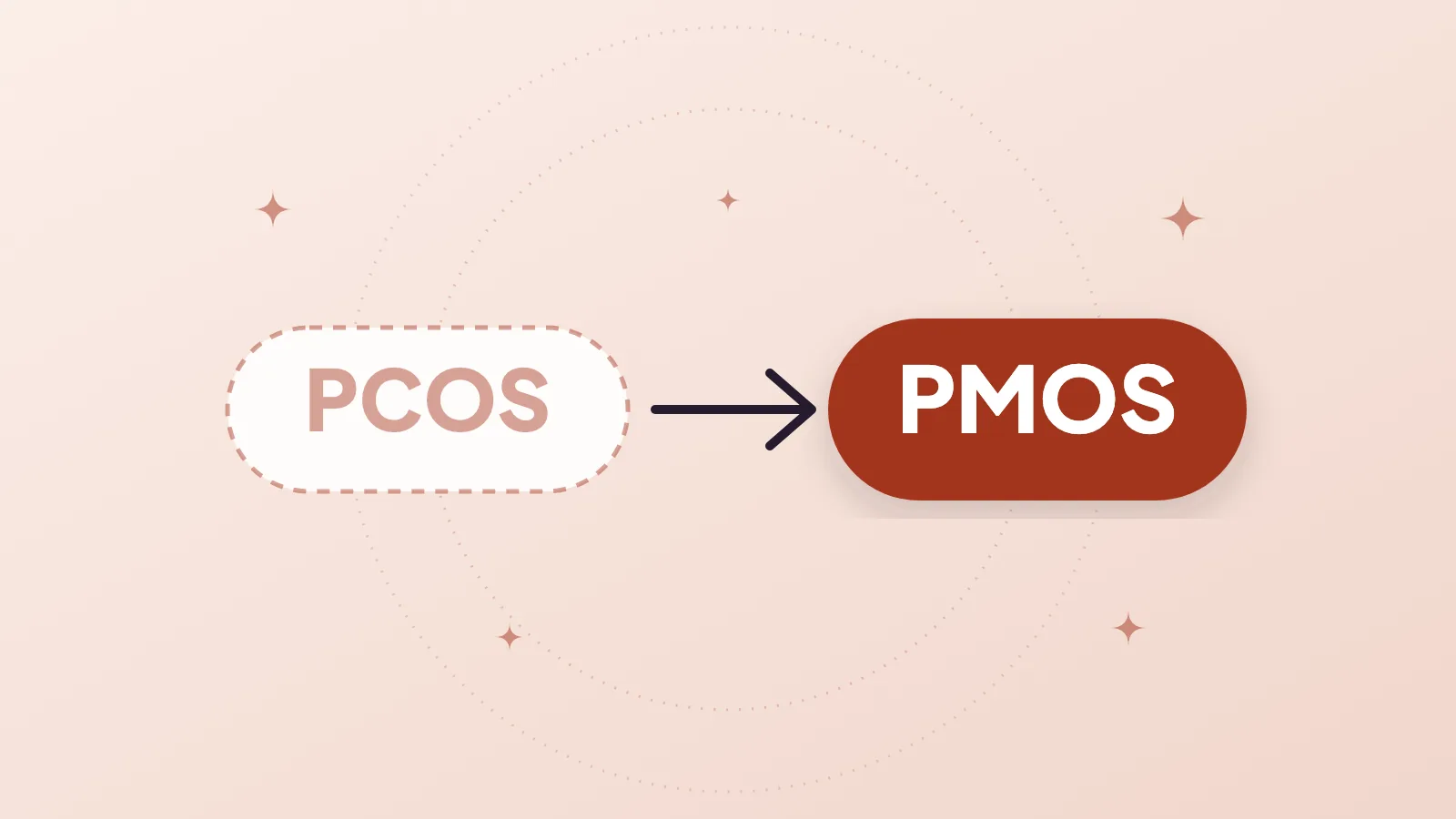
PMOS stands for polyendocrine metabolic ovarian syndrome. It is the new name for polycystic ovary syndrome (PCOS), announced in May 2026 after a global consensus published in The Lancet. The condition itself has not changed. The new name reflects its hormonal and metabolic features, not just the ovaries.
Key facts
- New name: polyendocrine metabolic ovarian syndrome (PMOS), replacing polycystic ovary syndrome (PCOS).
- Announced: May 2026, based on a global consensus process involving 56 patient and professional organisations.
- Who it affects: the WHO estimates that 10–13% of women of reproductive age have the condition, and up to 70% may be undiagnosed.
- Transition: a gradual move over several years, with the international guideline update in 2028 expected to use the new name.
- What to do now: nothing changes about diagnosis or care. You may keep seeing “PCOS” on forms and reports for some time.
What does PMOS stand for?
Each word in the new name points to something the old name left out.
- Polyendocrine: several hormone systems are involved, including insulin, androgens (sometimes called “male hormones”) and hormones that link the brain and the ovaries.
- Metabolic: the condition is closely linked with how the body handles sugar and fat, including insulin resistance.
- Ovarian: the ovaries are still involved, for example through irregular ovulation.
Why was PCOS renamed?
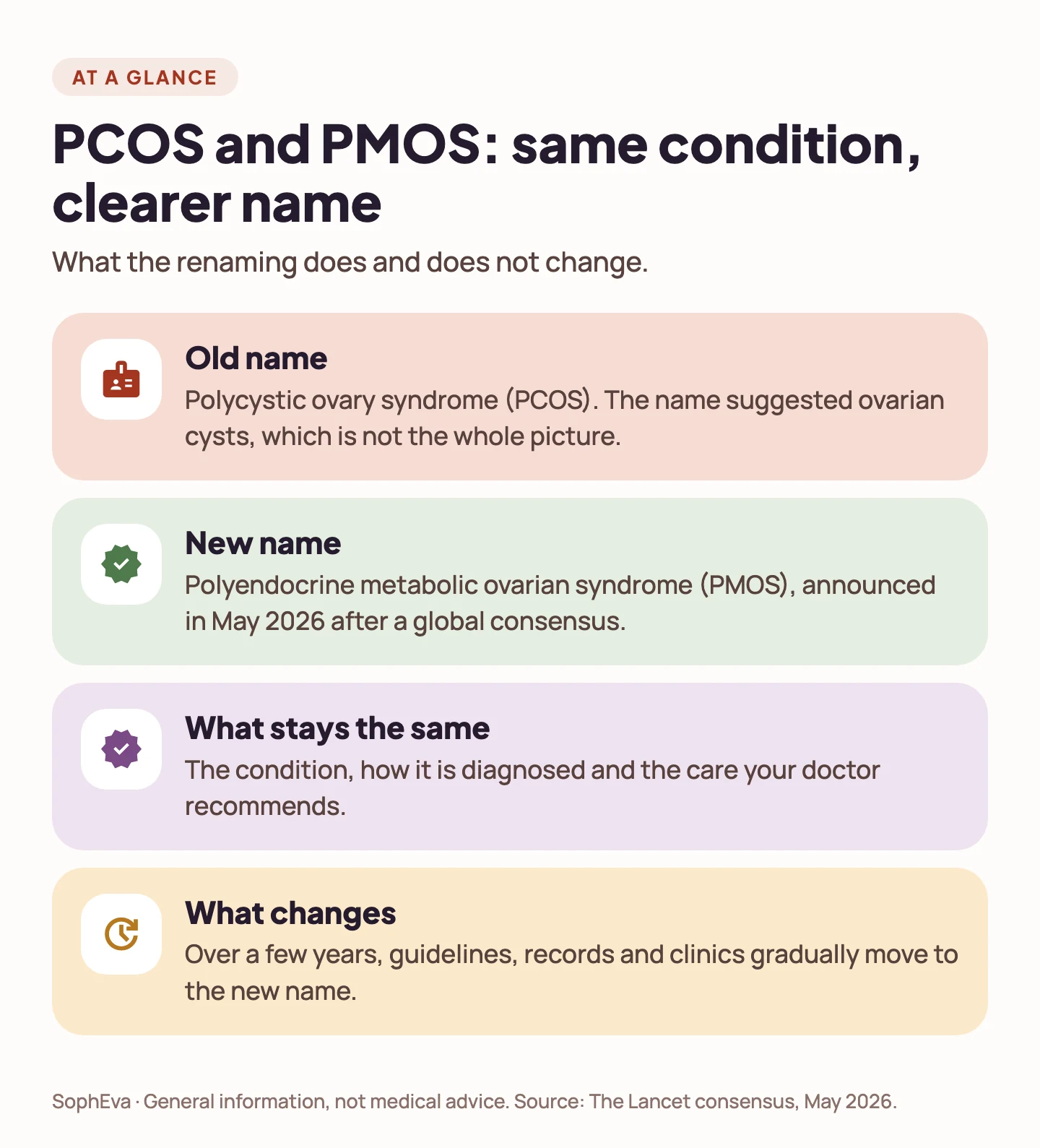
For decades, doctors and patients have said that “polycystic ovary syndrome” was a misleading name. It suggests that the problem is cysts on the ovaries. In reality, the small “cysts” seen on an ultrasound are follicles that have not matured, and many people with the condition do not have them at all.
Experts involved in the renaming said the old label contributed to delayed diagnosis and care that focused on the ovaries while missing the wider picture. In the consensus surveys, most patients (86%) and clinicians (71%) supported changing the name.
What is not changing?
- The way the condition is diagnosed.
- The care and treatments your doctor recommends.
- Your existing diagnosis. If you were told you have PCOS, you have PMOS.
Health systems, insurers, textbooks and medical records will take time to update, so both names will be used side by side for a few years.
What should you do if you have a diagnosis?
- Keep your recordsNothing needs to be re-done because of the name. Keep your existing reports and prescriptions.
- Ask about the whole pictureDoctors now stress that the condition affects more than periods and fertility. It is reasonable to ask whether your care covers blood sugar, cholesterol and blood pressure as well.
- Keep up everyday habitsHealthy eating, regular movement and good sleep are recommended for everyone with the condition, alongside any medical treatment.
- Ask questionsIf you are unsure about your treatment plan, talk to your doctor about your goals and options.
What if you think you might have it?
Irregular or missing periods, acne, excess facial or body hair, or difficulty getting pregnant can all have several causes. Only a doctor can tell what is behind them. Our guide to PCOS (PMOS) symptoms, diagnosis and when to see a doctor explains what to expect at an appointment.
Frequently asked questions
Is PCOS the same as PMOS?
Yes. PMOS is the new name for PCOS. It describes the same condition, with the same diagnosis and care.
Do I need new tests because of the new name?
No. The rename does not change how the condition is diagnosed or monitored.
Will doctors use PCOS or PMOS?
Both, for now. The change is being introduced gradually over several years, so expect to see both terms.
Do people with PMOS have ovarian cysts?
Not in the sense the old name suggested. The small “cysts” on an ultrasound are follicles, and not everyone with the condition has them.
Is there a cure?
The WHO says there is no cure, but treatment and healthy habits can improve health and quality of life. Your doctor can help you choose a plan.
Keep reading
PCOS (PMOS) symptoms, diagnosis and when to see a doctor
Everyday habits that support life with PCOS (PMOS)
The four phases of the menstrual cycle
Sources
- Polyendocrine metabolic ovarian syndrome, the new name for polycystic ovary syndrome: a multistep global consensus process (The Lancet, 2026)
- Endocrine Society: PMOS new name to improve diagnosis and care
- Yale Medicine: PCOS is renamed PMOS, what you need to know
- World Health Organization: Polycystic ovary syndrome fact sheet
- Contemporary OB/GYN: Global consensus renames PCOS to PMOS
This article is general educational information written by the SophEva editorial team. It does not diagnose, treat or replace advice from a qualified healthcare professional. Last reviewed September 2026.
Disclaimer: This information is for educational purposes only and does not constitute medical advice. Always consult with a healthcare professional before starting any new supplement or lifestyle regimen.