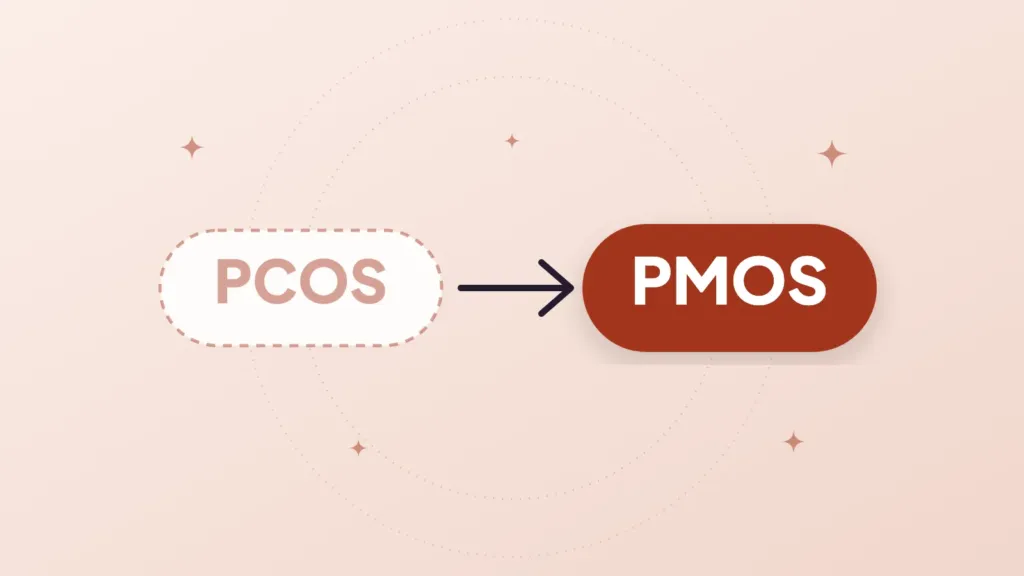
PCOS, now also called PMOS, commonly shows up as irregular or missing periods, signs of higher androgen hormones such as acne or extra facial and body hair, and sometimes difficulty getting pregnant. Doctors diagnose it when at least two of three features are present and other causes have been ruled out.
Key facts
- Common signs: irregular, unpredictable or absent periods; acne or oily skin; excess facial or body hair; thinning scalp hair; difficulty conceiving.
- Diagnosis: at least two of three features (irregular periods, signs of high androgens, polycystic ovaries on ultrasound), after other causes are excluded.
- Not everyone has every symptom. Severity varies widely from person to person.
- Who to see: a gynaecologist, endocrinologist or your family doctor.
What are the common symptoms?
Symptoms often begin in the teenage years or early twenties, but they can appear or become noticeable at any age. Most people have some of the following, and few have all of them.
Changes in your periods
- Periods that are irregular, far apart or absent.
- Cycles that are often longer than about 35 days.
- Unpredictable bleeding, sometimes heavy.
Signs of higher androgens
- Acne or oily skin, especially along the jaw and chin.
- Extra hair on the face, chest or abdomen (hirsutism).
- Thinning hair on the scalp.
Fertility
- Difficulty getting pregnant, because ovulation may be irregular or absent.
Metabolic and general signs
- Weight gain or difficulty managing weight.
- Dark, velvety patches of skin, often on the neck or underarms, which can be a sign of insulin resistance.
- Tiredness, low mood or anxiety. The WHO notes that anxiety and depression are more common in people with the condition.
How is it diagnosed?
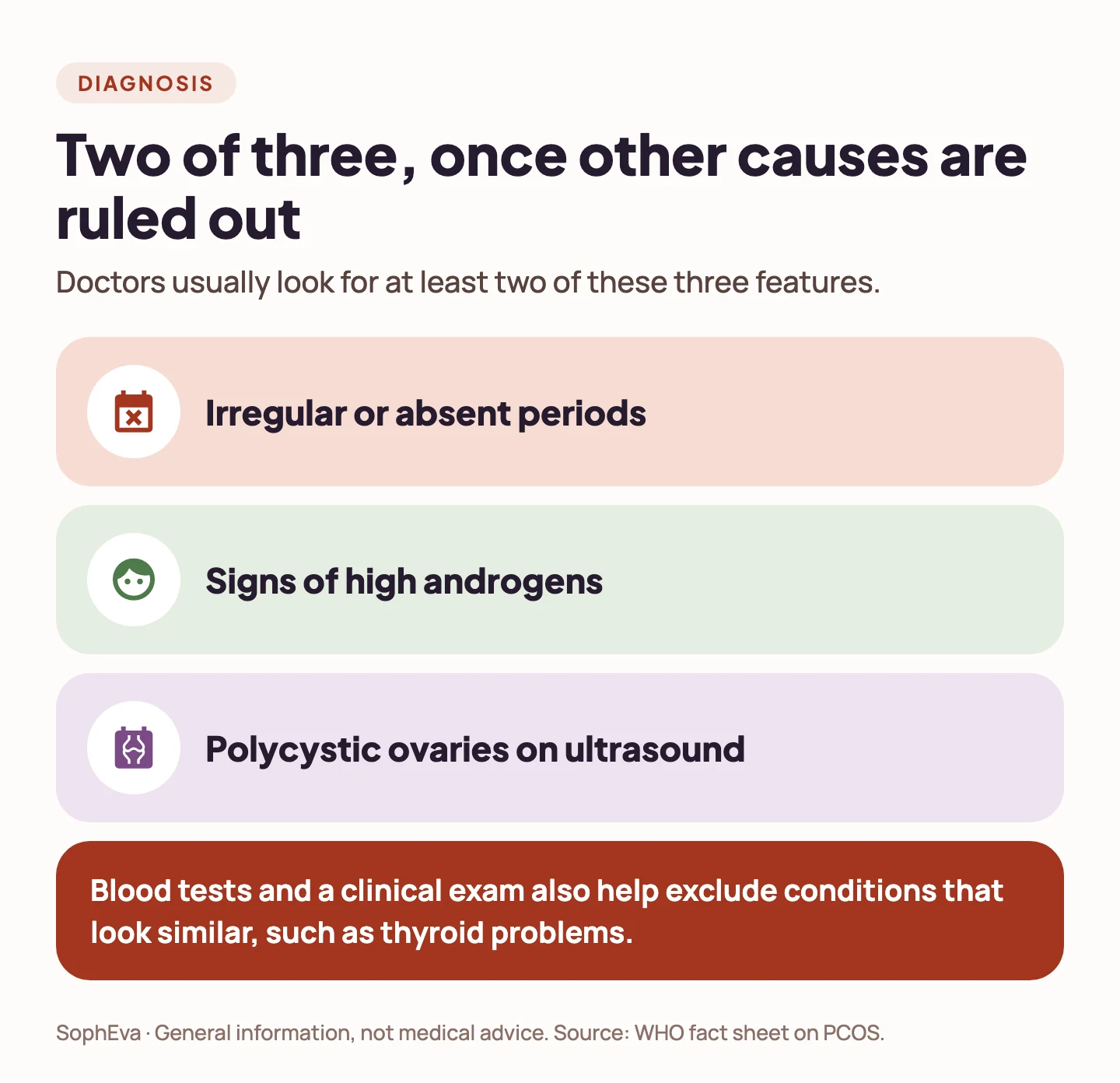
There is no single test. Your doctor will usually ask about your periods and symptoms, examine you and arrange tests. Diagnosis generally needs at least two of these three features after other causes have been excluded:
- Irregular or absent periods.
- Signs of high androgens, either physical signs or raised levels on a blood test.
- Polycystic-appearing ovaries on an ultrasound.
This means you can have the condition without cysts on a scan, and cysts on a scan alone do not mean you have it. In teenagers, doctors are often careful before diagnosing, because irregular periods are common in the first few years after periods begin.
What else can look similar?
Several other conditions can cause irregular periods or excess hair, so your doctor may check for them. Examples include thyroid problems, raised prolactin levels and some adrenal gland conditions. Blood tests and an ultrasound help sort these out. Do not assume the cause; let the tests decide.
Health areas doctors often check over time
Because the condition is metabolic as well as hormonal, doctors often look at:
- Blood sugar and insulin resistance, and the risk of type 2 diabetes.
- Cholesterol and blood pressure.
- Sleep, including signs of sleep apnoea such as loud snoring.
- Mood and mental wellbeing.
When should you see a doctor?
- Your periods are absentYou have missed three or more periods in a row and are not pregnant.
- Your cycles are very irregularThey are often longer than 35 days, or unpredictable month after month.
- You notice new or worsening signsFor example, persistent acne, excess hair growth or hair thinning.
- You are trying to conceiveYou have been trying for 12 months, or six months if you are over 35.
- Something worries youVery heavy or painful periods, sudden changes or any symptom that concerns you.
How to prepare for your appointment
- Note the first day of each period for the last few months.
- List your symptoms and when they began.
- Bring a list of medicines and supplements you take.
- Write down your questions, including your goals, such as managing symptoms or planning a pregnancy.
Try this today
Open your calendar and mark the first day of your last three periods. Even a rough record helps your doctor.
Frequently asked questions
Can you have PCOS with regular periods?
Some people with the condition still have regular periods. Your doctor will look at your overall picture, not just your cycle.
Do I need an ultrasound to be diagnosed?
Not always. If you have both irregular periods and clear signs of high androgens, a scan may not be needed. Your doctor will decide.
Is PCOS the same as PMOS?
Yes. PMOS is the new name for PCOS, announced in May 2026. See our explainer on what the new name means.
Can PCOS be cured?
There is no cure, but symptoms can be managed and long-term health protected with medical care and healthy habits.
Keep reading
PCOS is now PMOS: what the new name means
Everyday habits that support life with PCOS (PMOS)
The four phases of the menstrual cycle
Sources
This article is general educational information written by the SophEva editorial team. It does not diagnose, treat or replace advice from a qualified healthcare professional. Last reviewed September 2026.
Disclaimer: This information is for educational purposes only and does not constitute medical advice. Always consult with a healthcare professional before starting any new supplement or lifestyle regimen.