
You do not need a complicated diet to eat well. A simple mental picture of the plate, repeated most days, does a surprising amount of the work. Here is how to build it with everyday Indian ingredients.
The plate, in one picture
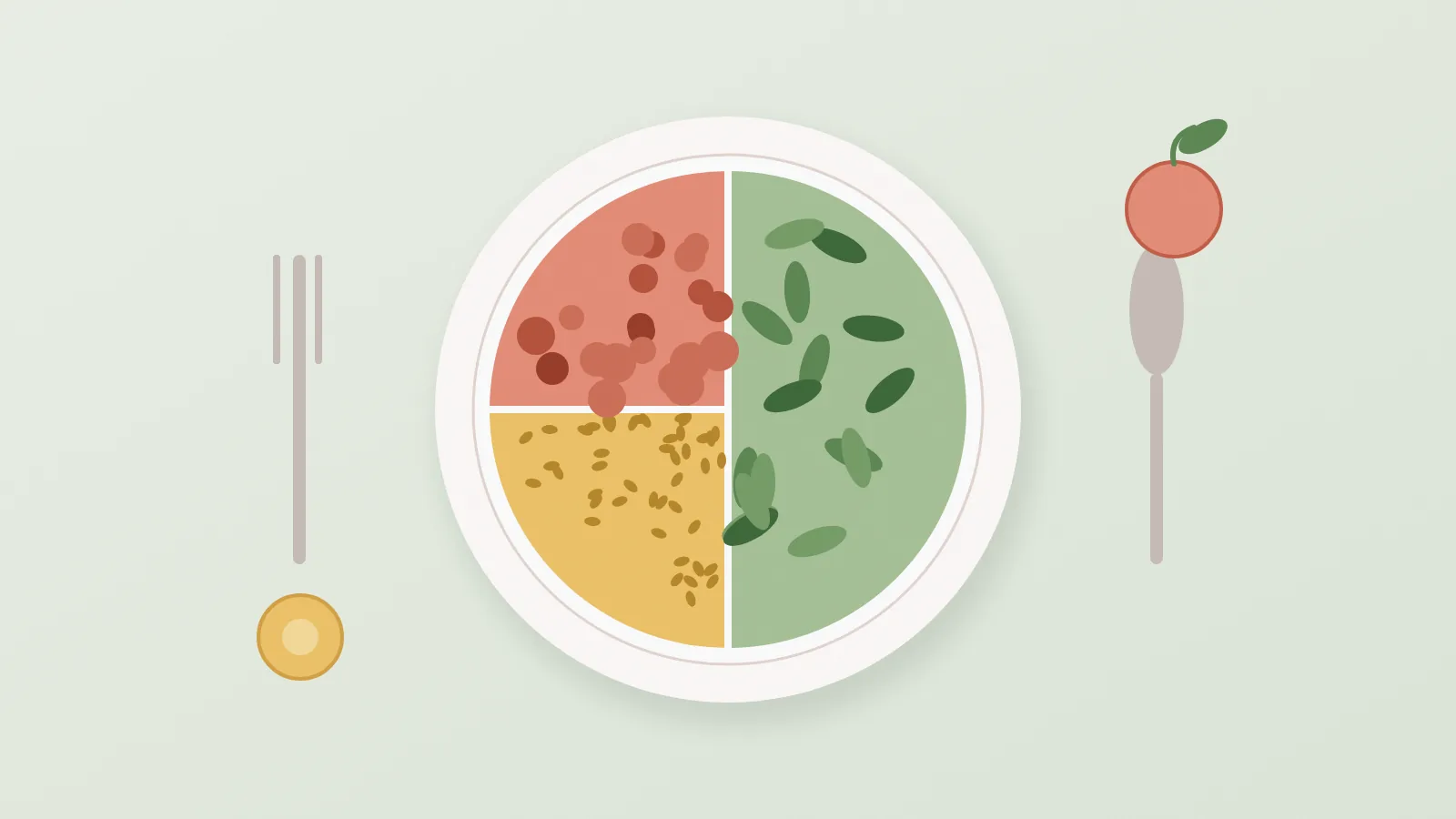
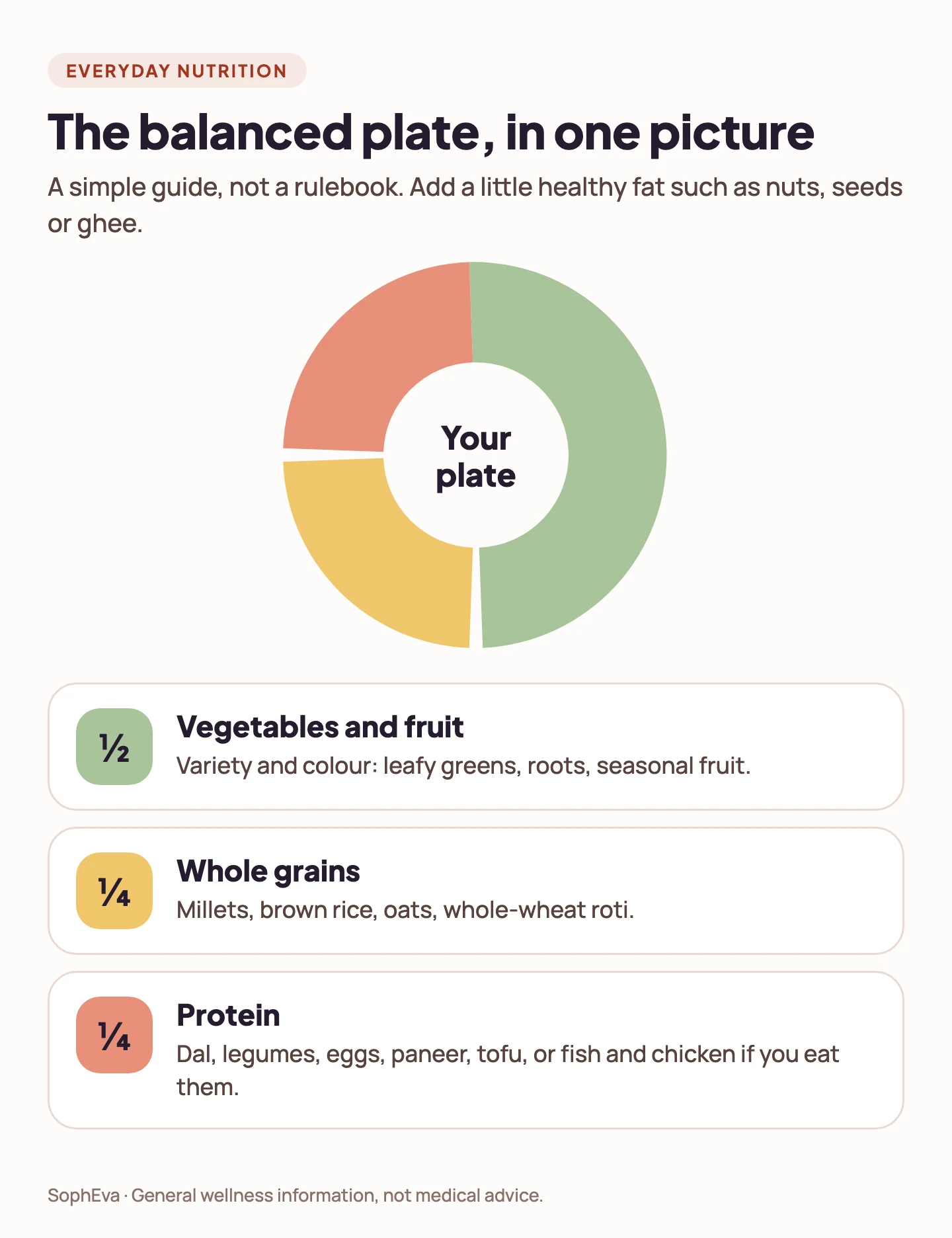
Imagine your plate divided into three parts. Half is vegetables and fruit, a quarter is whole grains, and a quarter is protein. A small amount of healthy fat, such as nuts, seeds, ghee or oil, rounds it out. This layout works for breakfast, lunch and dinner, and it is easy to adapt to any cuisine.
Filling each part
Vegetables and fruit
Variety matters more than perfection. Try to include different colours through the week: leafy greens like spinach and methi, orange vegetables like carrots and pumpkin, red tomatoes and beetroot, and seasonal fruit. Fibre from vegetables helps you feel full and supports digestion.
Whole grains
Swap some refined grains for less processed versions: whole-wheat roti instead of maida, brown or red rice, millets such as ragi, jowar and bajra, or oats. These give steadier energy and more fibre.
Protein
Dal, rajma, chana, sprouts, curd, paneer, tofu and eggs are all good sources. If you eat fish or chicken, those work too. Including protein at each meal helps you stay satisfied for longer.
A seven-day set of ideas
- MondayVegetable poha with peanuts; dal, roti and lauki sabzi; a fruit.
- TuesdayBesan chilla with mint chutney; khichdi with curd and a side salad.
- WednesdayOats with nuts and berries; rajma, brown rice and cucumber raita.
- ThursdayIdli with sambar; paneer and vegetable stir-fry with roti.
- FridayRagi dosa with chutney; chana salad bowl; a light vegetable soup.
- SaturdayVegetable paratha with curd; dal, rice and sautéed greens.
- SundayEgg or tofu bhurji with toast; a mixed vegetable pulao and raita.
Quick takeaway
Aim for the plate most of the time, not every time. A flexible, enjoyable pattern is easier to keep than a strict one.
Small swaps that add up
- Add a handful of greens to dal or eggs.
- Keep a jar of roasted chana, seeds or nuts for snacks.
- Choose whole fruit over juice.
- Drink water regularly and enjoy chai in moderation.
- Cook once and use leftovers as tomorrow’s lunch.
What about supplements?
Food comes first. Supplements can help fill specific gaps for some people, but they are not a replacement for a varied diet. If you are considering one, check the label carefully and speak to a healthcare professional, especially if you are pregnant, breastfeeding, managing a condition or taking medication.
Make the routine effortless
The SophEva Rituals Kit gives you a pre-measured morning and evening sachet, so there is one less decision to make each day.
Disclaimer: This information is for educational purposes only and does not constitute medical advice. Always consult with a healthcare professional before starting any new supplement or lifestyle regimen.